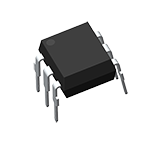
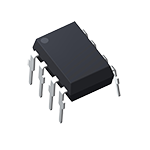
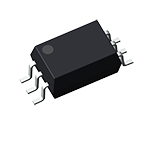
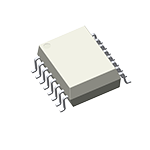
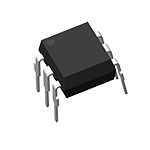
In instrumentation and equipment, optocouplers achieve electrical isolation between high and low voltage circuits, suppress loop noise interference, and ensure stable and reliable sampling and communication signals. The AT817 and AT357 are used for switching signal isolation in instruments; the AT17X and AT21X series provide multiple current transmission ratios, suitable for various switching signal isolation scenarios; the AT6N137 enables high-speed digital communication isolation; the ATW501 high-precision linear optocoupler performs analog voltage and current sampling isolation, effectively preventing high voltage intrusion that could damage the main control circuit, ensuring instrument measurement accuracy, and enhancing overall anti-interference capability and operational stability.
Power Detection:
In power detection instruments, optocouplers isolate high-voltage sampling lines from internal weak current main control circuits, isolate grid voltage fluctuations, surges, and ground loop interference, prevent high-voltage impact from damaging precision measurement chips, ensure accurate and stable collection of power parameters such as current and voltage, and ensure accurate and reliable instrument measurement data.
Environmental sensing instruments:
Environmental sensing instruments isolate external sensing probes from internal control circuits of equipment through optocouplers, isolating electromagnetic interference, static electricity, and voltage deviation generated by complex environments on site, eliminating measurement errors caused by ground loops, stably transmitting temperature, humidity, water quality and other detection signals, ensuring the authenticity and accuracy of monitoring data, and protecting precision components inside the instrument from external abnormal current impact.
Industrial measurement and control:
Industrial testing equipment uses optocouplers to isolate external acquisition lines from the main control circuit, isolating electromagnetic interference and voltage surges generated by industrial field motors and frequency converters, eliminating numerical drift caused by ground loop voltage differences, stably transmitting flow, displacement and other detection signals, avoiding damage to precision components by high voltage impacts, and ensuring continuous, accurate and reliable detection data.